
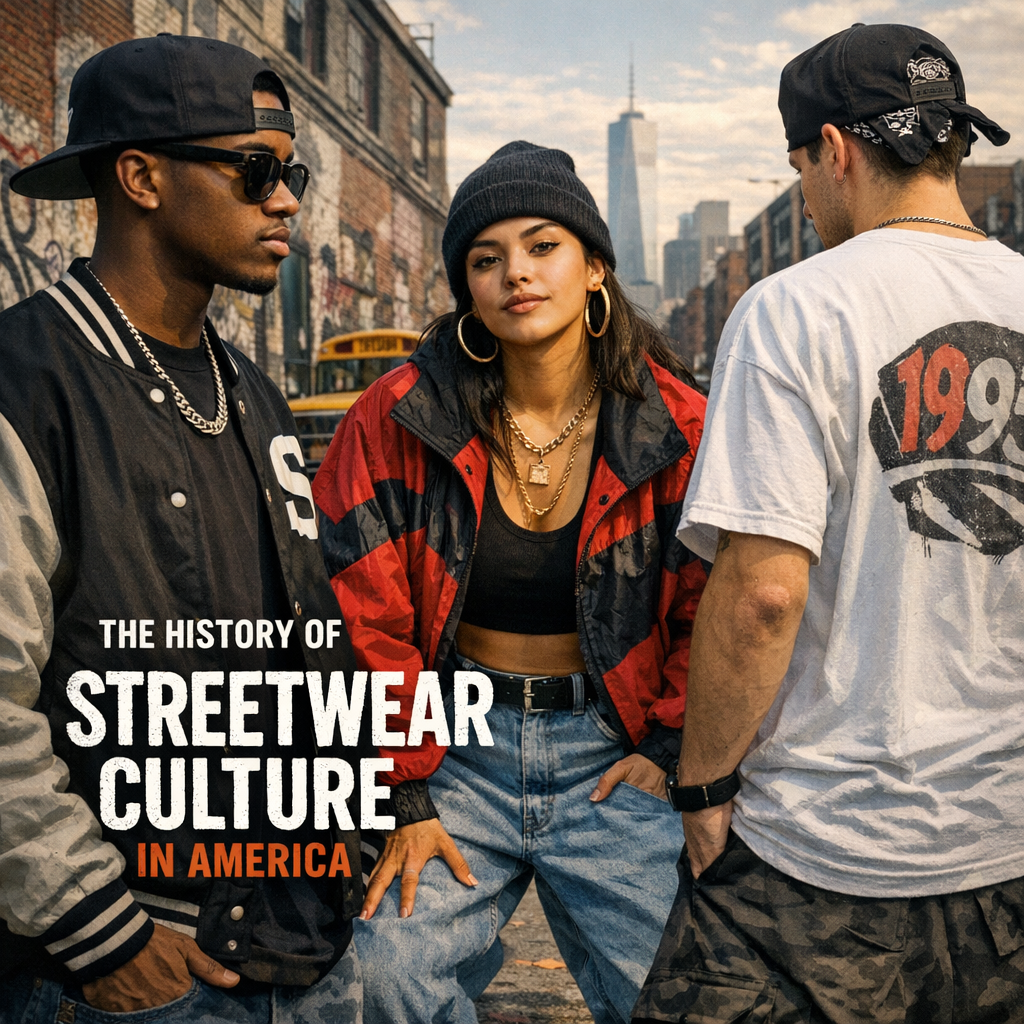
The History of Streetwear Culture in America
Streetwear in the U.S. didn’t start in fancy stores or on runways. It started where people actually lived their lives: on skate ramps, basketball courts, and city sidewalks. The History of Streetwear Culture in America is really the story of young people taking everyday clothes and turning them into identity, like a personal flag you can wear.
What makes streetwear special is how it travels. A look can start in one neighborhood, catch fire through music or sports, then spread across the country. Trends move like graffiti on a train car: quick, bold, and hard to ignore. And even when styles change, the spirit stays the same.
The History of Streetwear Culture in America
The earliest roots of streetwear in America go back to the late 1970s and 1980s, when subcultures were growing fast. Skateboarders needed tough clothes that could take a beating. Hip-hop artists wanted pieces that stood out under stage lights and in music videos. B-boys, DJs, and graffiti writers all dressed with a purpose, even if they didn’t call it fashion.
Instead of following fashion rules, these communities made their own. A hoodie wasn’t just warm; it was armor. A fresh pair of sneakers wasn’t just footwear; it was respect. And a logo wasn’t just branding; it was a signal you belonged, or at least that you understood the code.
Early American streetwear: skate parks, hip-hop, and DIY
Before streetwear was a big business, it was mostly DIY. People customized jackets, traded tees, and hunted for rare sneakers like they were treasure. Local shops, small screen printers, and neighborhood tastemakers mattered more than big magazines.
Word-of-mouth was everything. If someone you respected wore a certain hat or tee, that was the “ad.” There was no need for a billboard. The street was the billboard.
- Skate culture pushed loose fits, durable fabrics, and comfort.
- Hip-hop culture turned sportswear and workwear into style statements.
- DIY printing and customizing made clothes feel personal and one-of-one.
The History of Streetwear
By the 1990s, streetwear became more recognizable as its own lane. Brands started building around limited drops, bold graphics, and strong identity. Instead of selling “just clothes,” they sold a feeling: confidence, edge, and community.
This is also when streetwear started blending with other American style staples. Think of how workwear jackets, cargo pants, varsity gear, and athletic fits all mixed together. Streetwear was like a DJ sampling different sounds and turning them into a new track.
How The History of Streetwear Culture in America shaped brand identity
Some of the smartest streetwear brands didn’t try to please everyone. They spoke directly to their people. They leaned into small releases and made fans feel like insiders. If you missed a drop, that was part of the thrill. It made the next one feel even bigger.
The best brands also understood storytelling. A graphic tee could reference music, sports, politics, or neighborhood pride. Streetwear became a wearable conversation starter. If you want a simple way to explore more details about how modern street style is curated today, it helps to look at how these early ideas still show up in new collections.
- Limited releases made items feel rare and special.
- Logos became symbols people wore to show who they were.
- Neighborhood culture turned into a national style language.
The History of Streetwear Culture in America
The 2000s and 2010s changed everything. Social media, online stores, and sneaker apps sped up trends. Streetwear didn’t just spread city to city; it spread phone to phone. Suddenly, you didn’t need to live in New York or L.A. to be tapped in. You just needed Wi-Fi and good timing.
This is also when streetwear started getting serious attention from luxury fashion. The walls between “high fashion” and “street” got thinner. A hoodie could cost the same as a designer jacket. Sneakers became collectibles. And collabs turned into major events.
The History of Streetwear Culture in America in the internet era
Online culture made streetwear louder and faster. It also made it more competitive. People lined up online instead of outside stores. Resale markets exploded, and some pieces became hard to get even if you had the money.
Still, the heart of streetwear stayed the same: a mix of style and story. If you want practical information on how people build streetwear outfits today, it often comes down to the same basics as decades ago: fit, comfort, and a few standout items that feel personal.
- Social media made trends spread faster than ever.
- Collabs created hype and brought new audiences in.
- Resale culture changed how people shop and collect.
The History of Streetwear Culture in America
Today, streetwear is everywhere, but it still means different things to different people. For some, it’s clean basics and great sneakers. For others, it’s loud graphics, bold cuts, and standing out. The History of Streetwear Culture in America keeps evolving because the street keeps changing, and people keep remixing what came before.
What’s also clear now is that streetwear is bigger than clothing. It’s tied to music, sports, art, and even tech. It can reflect social issues. It can show pride in where you’re from. And it can turn something simple, like a T-shirt, into a message.
Where The History of Streetwear Culture in America goes next
The next chapter is already being written by new designers, young skaters, new rappers, and everyday people posting outfits and stories. Sustainability is becoming a bigger deal, too, with more folks looking for vintage, upcycled pieces, and better-made basics. Streetwear has always been about what’s real, and waste doesn’t feel real anymore.
In the end, streetwear is like a language with a thousand accents. You can spot the roots, but everyone speaks it their own way. The History of Streetwear Culture in America proves that the strongest style doesn’t come from a rulebook. It comes from the street, where people turn daily life into art, one outfit at a time.
